Publications
In Press
- Nat Ecol EvolA risk framework for addressing nature’s harmful contributions to peopleMatthew P Faith, Sian Rees, Rory Gibb, and 8 more authorsNature Ecology & Evolution, In Press
2026
- Ecol IndicIntegrating plankton indicators to assess the state of pelagic habitats in the Northeast AtlanticAbigail McQuatters-Gollop, Matthew M Holland, Luis Felipe Artigas, and 8 more authorsEcological Indicators, 2026
Pelagic habitats in the Northeast Atlantic (NEA) have undergone substantial ecological change over the past six decades due to pressures such as climate change, overfishing, and nutrient pollution. To assess Good Environmental Status (GES; under the EU Marine Strategy Framework Directive) we present an integrated assessment of NEA pelagic habitat status using two plankton biodiversity indicators, representing community composition and plankton biomass/abundance, alongside an informative assessment of plankton diversity. We applied a stepwise approach, first combining component-level results across assessment units and fixed-point stations for four pelagic habitat types, then integrating status across indicators and habitat types to derive regional environmental status. Because operational thresholds are lacking, ‘Uncertain’ was the default status, while ‘Not Good’ required consistent, spatially representative biological change plausibly linked to anthropogenic pressures. Across the assessed indicators, we found regional and habitat-specific changes in plankton lifeform abundance, and general declines in phytoplankton biomass and zooplankton abundance. Six habitat-region combinations were assessed as ‘Not Good’, three as ‘Uncertain’, and one was ‘Unassessed’ due to lack of data. No pelagic habitats or regions were found to be in GES. It was only possible to designate ‘Not Good’ or ‘Uncertain’ status due to lack of suitable baseline data and uncertainty around what constitutes ‘Good’ status in the context of NEA pelagic habitats. Sea surface temperature and nutrients were the most important pressures associated with change. These results highlight the need to reduce nutrient pollution and meet international climate targets to conserve pelagic habitats and their ecosystem services.
- Harmful AlgaeChanging Pseudo-nitzschia and Dinophysis distributions in the North Sea and Western Approaches (NE Atlantic) and their potential use in biodiversity assessmentsMatthew M Holland, Eileen Bresnan, Martin Edwards, and 7 more authorsHarmful Algae, 2026
Pseudo-nitzschia and Dinophysis are two commonly occurring phytoplankton genera along Europe’s Atlantic coast. Species within these genera can produce toxins that accumulate in shellfish and pose health risks if consumed. Sustained monitoring of shellfish growing waters has generated decades-long time-series for these two genera, which have been considered for use in statutory biodiversity assessments as proxies for diatoms and dinoflagellates. There is also evidence that distributions are shifting; It is important to document these changes to anticipate risks for shellfisheries, and higher trophic levels. We assessed whether Pseudo‑nitzschia and Dinophysis data could support statutory biodiversity assessments and quantified distributional change through time. We compared seasonal and interannual variability in Pseudo‑nitzschia and Dinophysis with total diatom and dinoflagellate abundance at two UK stations (L4, English Channel; Stonehaven, Scotland) and used Continuous Plankton Recorder data (1960–2020) to map decadal distributions. A notable spring increase in Pseudo‑nitzschia occurred in the southern/eastern North Sea since ∼2000, followed by a post‑2010 reduction. Dinophysis remained largely summer‑restricted and declined after 2000 in parts of the eastern North Sea. Station and CPR data were complementary, but not directly comparable, reflecting differences in spatial variability and capture efficiency. We found limited evidence, however, to support proxy potential for either genus. While there were some localised seasonal correlations, they were generally inconsistent or weak. Our results show that neither genus is suitable as a proxy for diatom or dinoflagellate lifeforms in statutory biodiversity assessment, but both are potentially valuable as evidence for HAB pressure when interpreted alongside toxin measurements.
- Ecol IndicGelatinous zooplankton as indicators in the Kunming Montreal Global Biodiversity FrameworkJohn Terenzini, Laura Falkenberg, Sanae Chiba, and 3 more authorsEcological Indicators, 2026
Global biodiversity frameworks require robust, representative indicators to effectively track progress towards conservation targets. Spatial and temporal gaps in global marine biodiversity datasets, however, and a limited number of marine biodiversity indicators, limit our ability to effectively manage marine ecosystems. Despite the ecological and socio-economic significance of marine ecosystems, they remain underrepresented in current indicator suites, particularly in the recently adopted Kunming-Montreal Global Biodiversity Framework (KMGBF). Gelatinous zooplankton (GZ), a key yet often overlooked component of marine ecosystems, have the potential to strengthen biodiversity assessments through their responsiveness to environmental change and impacts on several contributions of the ocean to people. This study evaluates the marine relevance of the KMGBF’s headline, component, and complementary indicators and identifies where GZ data can inform these metrics. We find that 61% of indicators for the environmentally and policy focused Targets 1–13, are relevant to the marine realm. Through a rapid evidence review and examination of existing policy frameworks, we demonstrate that GZ monitoring data can meaningfully contribute to at least seven KMGBF headline indicators, particularly in relation to invasive species, ecosystem restoration, sustainable use, and nature’s contributions to people. We propose practical steps to incorporate GZ into global indicator systems via Essential Ocean Variables, highlighting the urgent need to integrate GZ data into biodiversity monitoring. Advancing the inclusion of GZ can support more comprehensive and policy-relevant assessments of marine biodiversity under the KMGBF.
- npj Ocean SustainScience challenges and solutions to support implementation of the Biodiversity Beyond National Jurisdiction AgreementClaire L Szostek, Angus Atkinson, Victor Martinez-Vicente, and 12 more authorsnpj Ocean Sustainability, 2026
The Biodiversity Beyond National Jurisdiction (BBNJ) Agreement provides a new opportunity to consolidate and achieve global marine environmental goals. Here we focus on how science and technology will support its implementation. We provide an overview of existing scientific knowledge and methods that are scalable to Areas Beyond National Jurisdiction (ABNJ). Reviewing data gaps, challenges and opportunities, we outline solutions and a roadmap focused on enhancing resources and capacity.
- bioRxiv
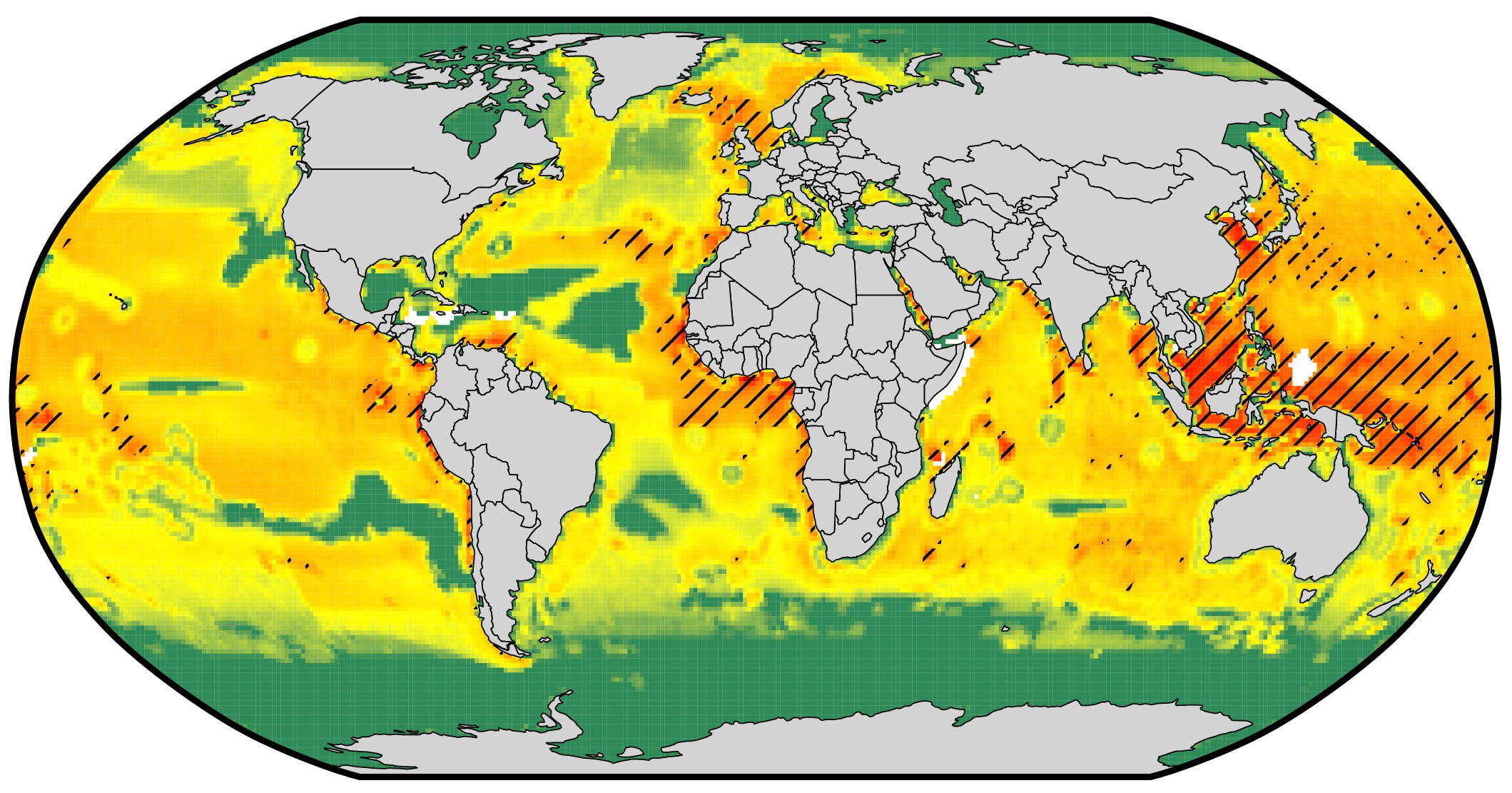 Mapping climate risks across global pelagic fishing groundsMatthew P Faith, Angus Atkinson, Ryan F Heneghan, and 8 more authorsbioRxiv (preprint), 2026
Ocean warming is projected to reduce the capacity of the global ocean to support fish biomass. The severity of projected biomass declines, however, is distributed highly unevenly at the global scale, meaning some nations face disproportionate socioeconomic risks from resultant fisheries declines. Here, we apply the IPCC climate risk framework through the lens of fishing grounds to identify global hotspots where climate-driven declines in supportable pelagic fish biomass pose the greatest threat to socioeconomic security. By integrating empirical size-spectrum projections of fish biomass declines (hazard) with present-day fishing effort (exposure) and a novel area-based index of fishing ground socioeconomic vulnerability, we identify risk hotspots around Southeast Asia, the western seaboard of Africa, and the West Pacific. Our projections are corroborated by an ensemble of ecosystem models and compared with historical observations of declining zooplankton biomass in the Northeast Atlantic, suggesting climate-driven fish biomass declines are already underway. Many of the regions we assessed as highest-risk are predominantly targeted by nations with relatively low adaptive capacity and who therefore face the greatest barriers to redistributing fishing effort to lower-risk fishing grounds. Socioeconomic risks could thus be partly mitigated by targeting risk hotspots with area-based interventions that directly support fish stocks, such as the restoration of essential fish habitats and the designation of Marine Protected Areas. Resourcing the development of regionally tailored models for high-risk regions will provide the best evidence for designing specific area-based measures that effectively reduce societal risks, but enforcing such measures will depend upon addressing illegal, unregulated and untracked fishing.
2025
- Mar. Policy
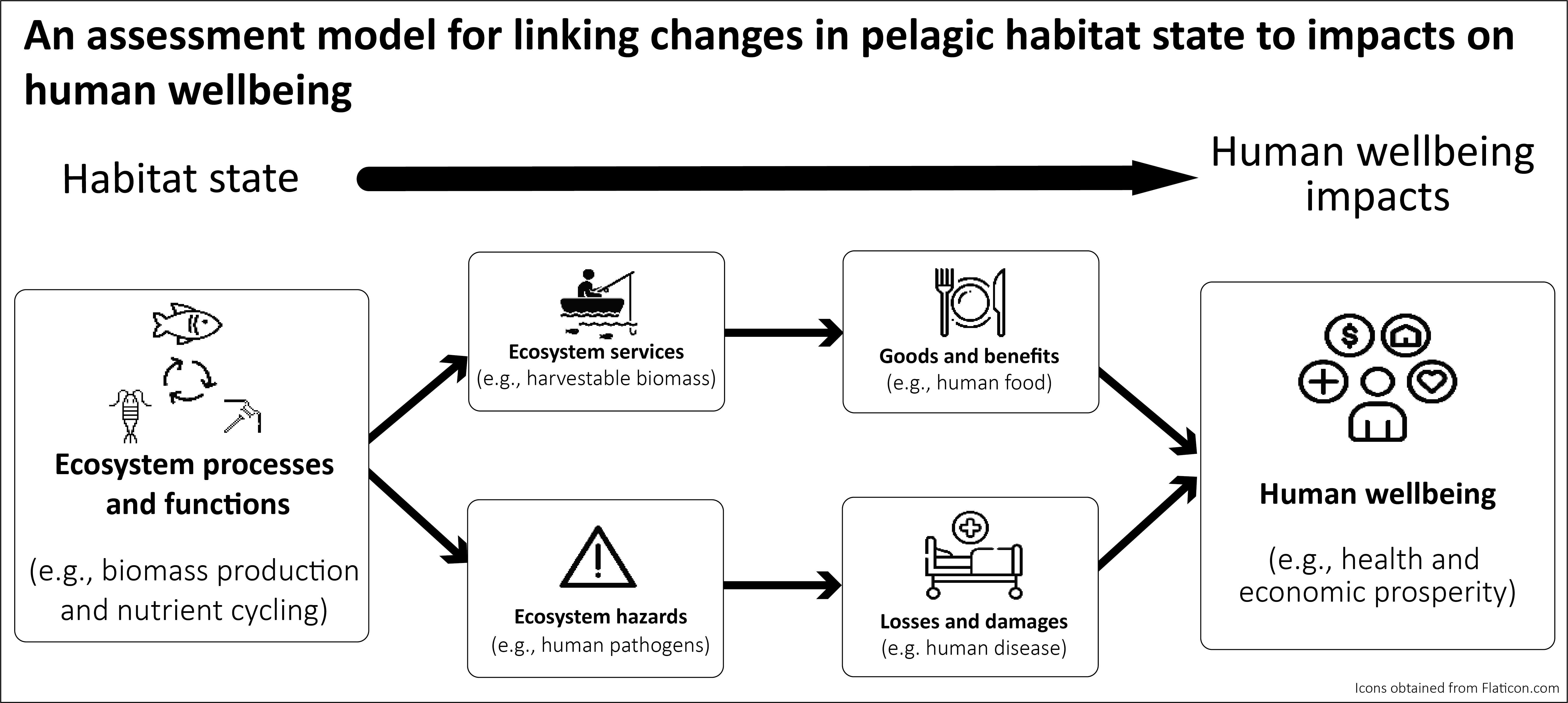 An assessment model for linking changes in pelagic habitat state to impacts on human wellbeingMatthew P Faith, Siân E Rees, Angus Atkinson, and 8 more authorsMarine Policy, 2025
Plankton monitoring datasets help inform indicators for marine biodiversity assessments under the European Union Marine Strategy Framework Directive and United Kingdom Marine Strategy. These indicators are used to assess long-term changes in the state of the pelagic habitats of the Northeast Atlantic which then guide policy formation and implementation to achieve Good Environmental Status. Across all ecosystems, environmental change has the potential to impact upon human wellbeing by changing the quantity and quality of ecosystem services. Here, we develop a socio-ecological assessment model that can describe how variations in pelagic habitat state, evidenced by plankton indicators, can impact human wellbeing. We show that pelagic habitat state can influence human wellbeing through changing the availability of ‘goods and benefits’ (as made available via ecosystem services), such as the contribution of phytoplankton to climate regulation, but also through mediating the risks of ‘ecosystem hazards’. Importantly, changes to pelagic ecosystem state will also drive changes to ecosystem services and ecosystem hazards in the wider marine food web, supported by ecosystem processes associated with plankton, such as the rate of primary production. Applying the proposed assessment model to plankton monitoring data highlights the potential for a greater depth of understanding of the human wellbeing impacts driven by state changes in pelagic habitats. Alongside making best use of the available plankton monitoring data, quantifying the human wellbeing impacts arising from changes to pelagic habitat state increases the evidence base for decision makers.
2024
- Sci. Total Environ.
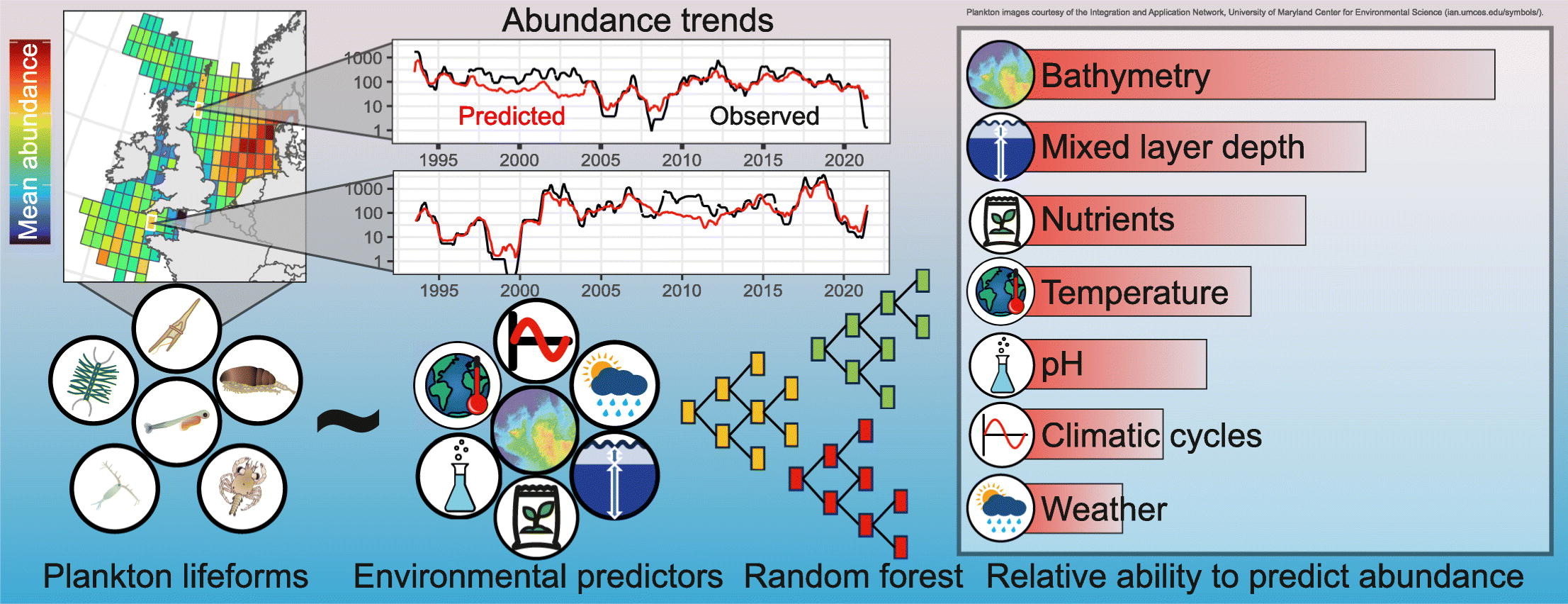 Predictors of long-term variability in NE Atlantic plankton communitiesMatthew M Holland, Angus Atkinson, Mike Best, and 8 more authorsScience of the Total Environment, 2024
Anthropogenic pressures such as climate change and nutrient pollution are causing rapid changes in the marine environment. The relative influence of drivers of change on the plankton community remains uncertain, and this uncertainty is limiting our understanding of sustainable levels of human pressures. Plankton are the primary energy resource in marine food webs and respond rapidly to environmental changes, representing useful indicators of shifts in ecosystem structure and function. Categorising plankton into broad groups with similar characteristics, known as “lifeforms”, can be useful for understanding ecological patterns related to environmental change and for assessing the state of pelagic habitats in accordance with the EU Marine Strategy Framework Directive and the OSPAR Commission, which mandates protection of the North-East Atlantic. We analysed 29 years of Continuous Plankton Recorder data (1993–2021) from the North-East Atlantic to examine how trends in plankton lifeform abundance changed in relation to one another and across gradients of environmental change associated with human pressures. Random forest models predicted between 57 % and 80 % of the variability in lifeform abundance, based on data not used to train the models. Observed variability was mainly explained by trends in other lifeforms, with mainly positively correlated trends, indicating bottom-up control and/or shared responses to environmental variability were prevalent. Longitude, bathymetry, mixed layer depth, the nitrogen-to‑phosphorus ratio, and temperature were also significant predictors. However, contrasting influences of environmental drivers were detected. For example, small copepod abundance increased in warmer conditions whereas meroplankton, large copepods and fish larvae either decreased or were unchanged. Our findings highlight recent changes in stratification, reflected by variation in mixed layer depth, and imbalanced nutrient ratios are affecting multiple lifeforms, impacting the North-East Atlantic plankton community. To achieve environmental improvements in North-East Atlantic pelagic habitats, it is crucial that we continue to address climate change and reduce nutrient pollution.